


Meet Our Vintners: Flowers Vineyards & Winery
A Conversation with Director of Winemaking Chantal Forthun
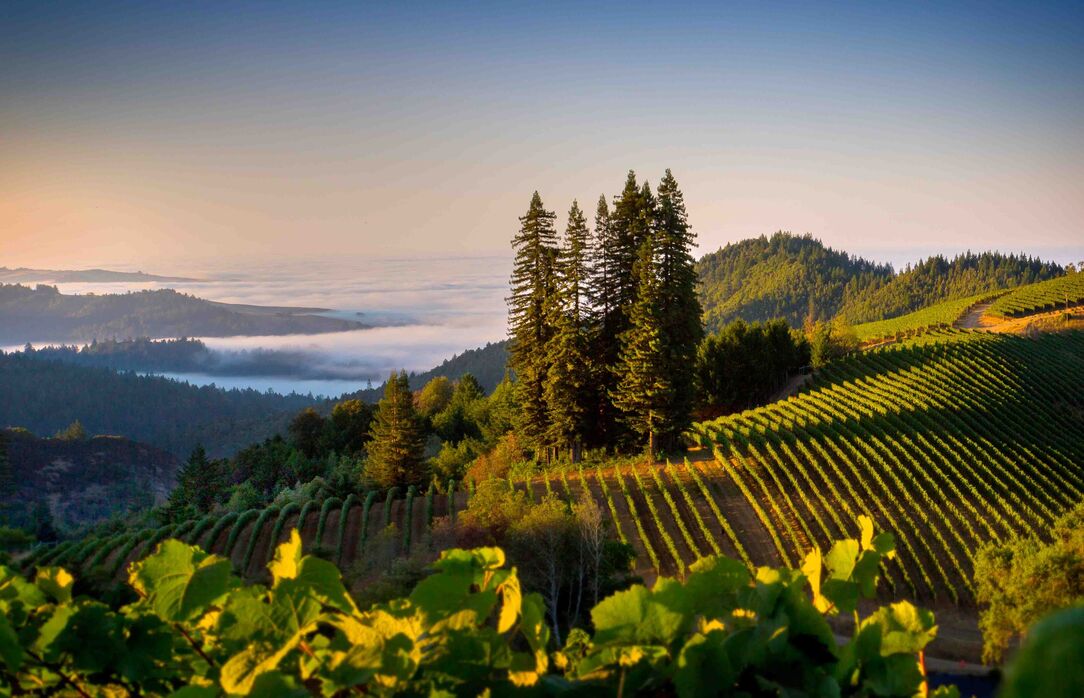
There are places so remote, so profoundly shaped by their environment, that they seem to exist outside of time. The far Sonoma Coast is one of them—fog-shrouded ridges perched above the Pacific, where elevation and ocean proximity converge to create conditions that, decades ago, were thought impossible for growing world-class wine.
Joan and Walt Flowers were told their dream would never work. Too cold. Too close to the ocean. Grapes would never ripen. They planted anyway—and in doing so, were among the first to discover one of California's most compelling wine regions. Today, under the guidance of Director of Winemaking Chantal Forthun, Flowers Vineyards & Winery has refined that vision into something extraordinary: wines of profound place and vintage, crafted through what they call "wilderness winemaking."
Wines of Place and Vintage
Walk into a conversation with Chantal and the first thing you understand is that Flowers is not about compromise. Their wines—elegant, mineral-driven Pinot Noirs and Chardonnays—exist because of where they're grown, not in spite of it.
"Our guiding principle has always been to make wines of place and of vintage," Chantal explains. "We're crafting wines without compromise that honor the essence of the place and the energy of the coastal ridges."
What makes this possible is both philosophy and precision. Flowers practices what many would call "minimal intervention" winemaking—but Chantal is quick to clarify what that actually means. "It's not hands-off," she says. "It's the opposite. Minimal intervention means more hands are involved. We're present in every moment, through every step."
In practice, this means 100% native yeast fermentation. High lees incorporation without stirring. Larger vessels for aging to preserve freshness and brightness. Every detail matters because the goal is singular: to amplify place. "The vineyard speaks," Chantal says simply.
The Coastal Difference
To understand Flowers' wines is to understand the Sonoma Coast—not the gentle valleys most people picture, but the far coast where elevation and ocean proximity create an entirely different proposition.
"The closer you are to the ocean, the more profound the impact," Chantal explains. The reasons are layered. Coastal proximity moderates temperatures, cooling days while keeping nights warmer than inland areas, creating even ripening conditions. But there's more: the San Andreas fault line runs along the coast, responsible for creating the dramatic ridges. "That brings a lot of soil diversity to the vineyards," Chantal notes.
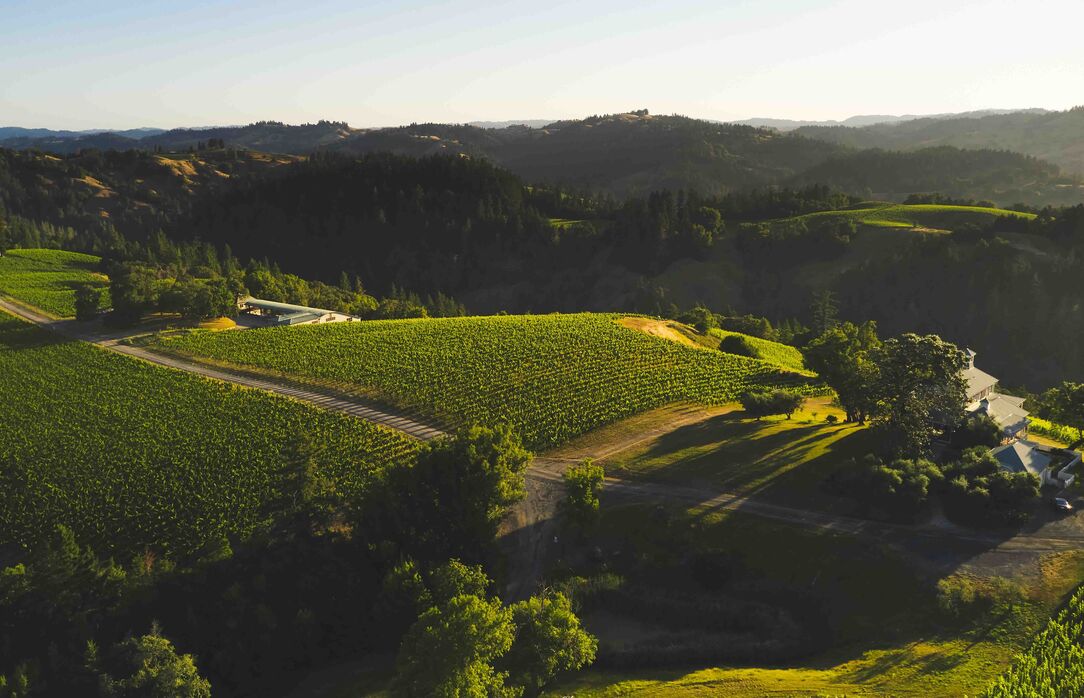
Elevation proves crucial. Flowers' estate vineyards sit between 1,150 and 1,875 feet—above the 900-foot fog line. This means they receive cool coastal air while basking in sunshine. The result is a sweet spot where grapes develop vibrant acidity and pure fruit flavors while retaining the savory botanical qualities that come from surrounding forests.
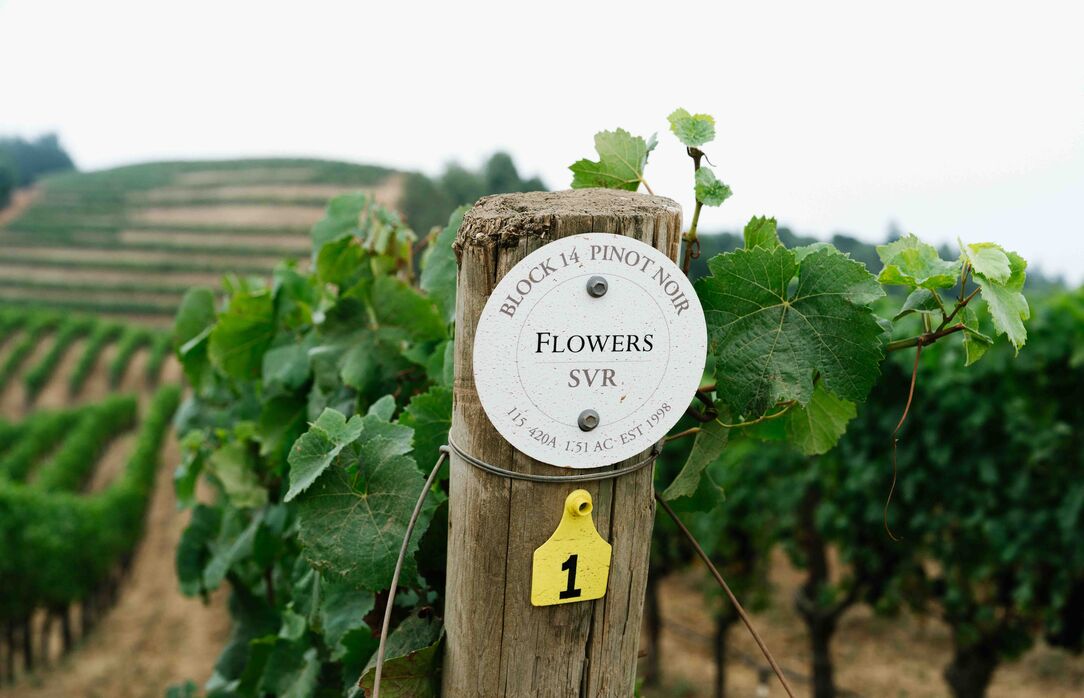
"Pinot Noir and Chardonnay are incredibly transparent to place," Chantal says. "Thin-skinned varieties that reflect where they're grown. On the Sonoma Coast, you get this lovely persistence and texture from the rocky soils, this vibrant acidity, and this cool, savory botanical quality."
Three Sites, One Philosophy
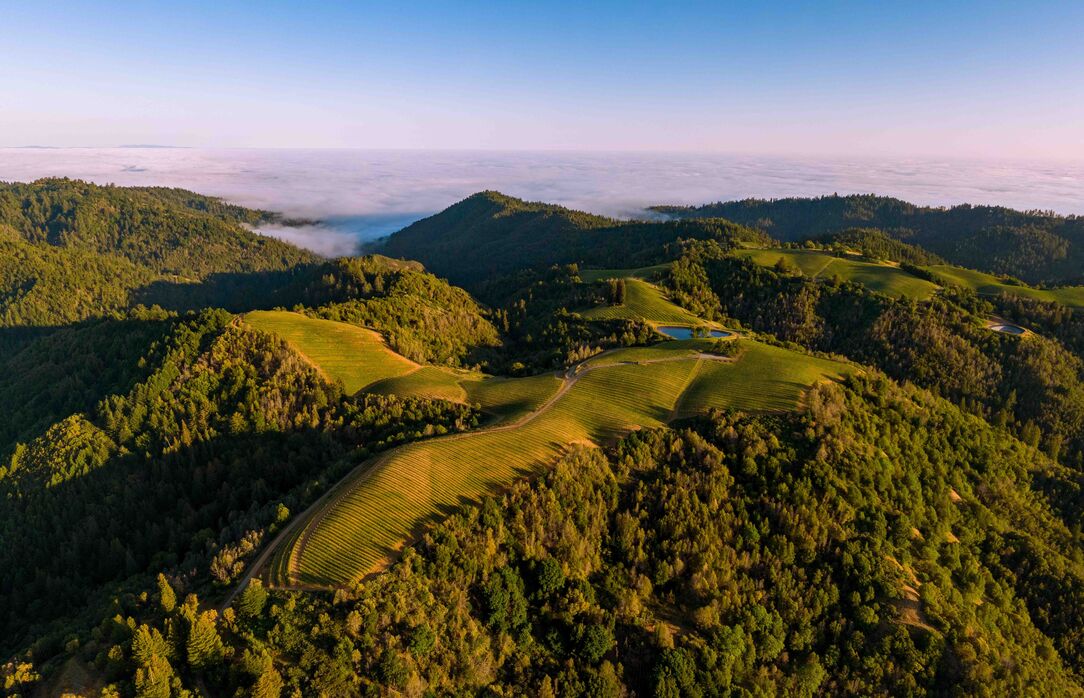
Flowers owns two primary estate vineyards—Camp Meeting Ridge and Sea View Ridge—in addition to the House of Flowers, their home in Healdsburg. Each is distinct, yet each expresses the same commitment to terroir.
Camp Meeting Ridge is a true ridge top at 1,150 to 1,400 feet, "hugged by the forest" on either side. Sea View Ridge is wilder, steeper, with undulating hillsides between 1,400 and 1,875 feet. "Every block within each vineyard has its own strategy," Chantal explains. "Tailored pruning targets. Tailored nutrition regimes. Even harvesting differs by block—we might pick one Chardonnay at 21 brix and another at 22."
This precision comes from stability. Chantal's winemaking team has collectively worked the properties for approximately 50 years—her vineyard manager over 25 years, Chantal herself 13 years, their cellar master approaching 20. This continuity allows them to anticipate seasonal needs and recognize patterns invisible to outsiders.
"No two seasons are exactly the same," Chantal notes. "But once you experience the breadth of seasons that can happen, you can anticipate what the place needs. And even though it's wines of place and wines of vintage, it's always going to taste like Camp Meeting Ridge."
Stewardship as Practice
Flowers has been CCOF certified since 2020, practicing organic farming since 2010. Less than 10% of their 700 acres is planted to vineyard—the rest remains forest and natural habitat. But for Chantal, sustainability goes deeper than certification.
Growing up in California's Central Valley surrounded by agriculture shaped her worldview. "I grew up with this deep respect for land and the people who work it," she recalls. "And I wanted to be outside. I wanted to do environmental work."
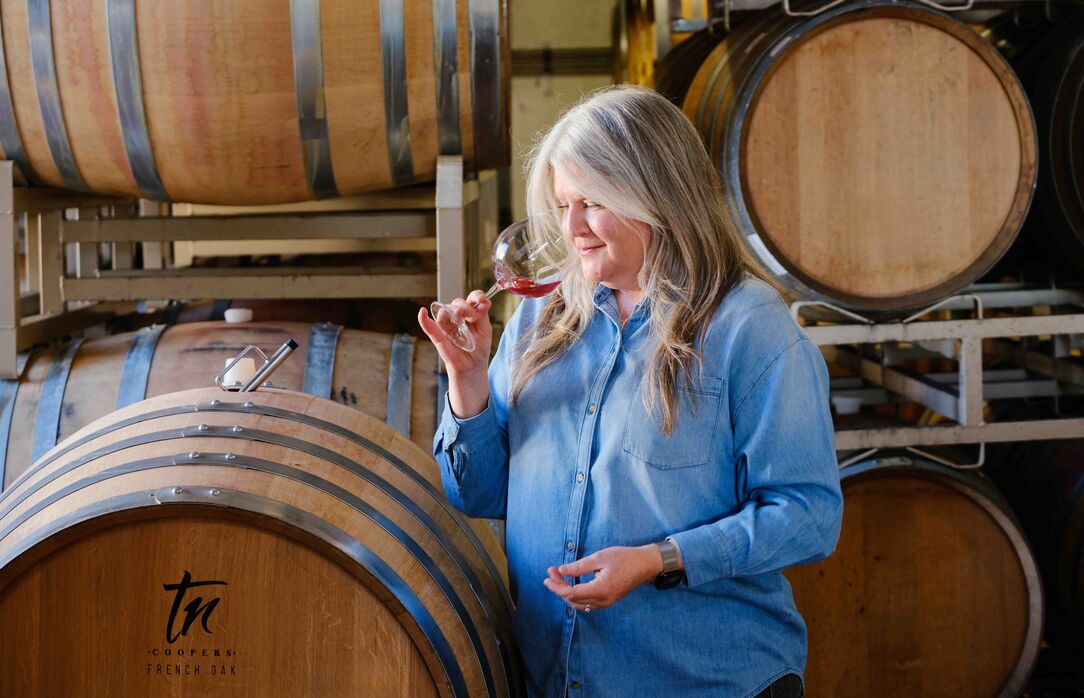
Now, she does—but through winemaking. "The primary goal from a farming standpoint is to build and support healthy soils," she says, particularly important at high elevation where soil is rocky. "Healthy soils lead to healthy plants, balanced yields, and grapes that retain purity and texture."
Her journey to Flowers was unconventional. After graduating with degrees in biology and botany, she took a seasonal job in a Lodi winery lab—and never left the industry. Her first real project was barrel-fermenting Chardonnay with native yeast under a patient winemaker willing to take a chance on a curious young scientist. "It was completely life-changing," she recalls. "Just watching the raw juice transform during fermentation. And recognizing the energy and community around the harvest. Everyone working toward one goal, knowing you only get one chance each year."
The House of Flowers Experience
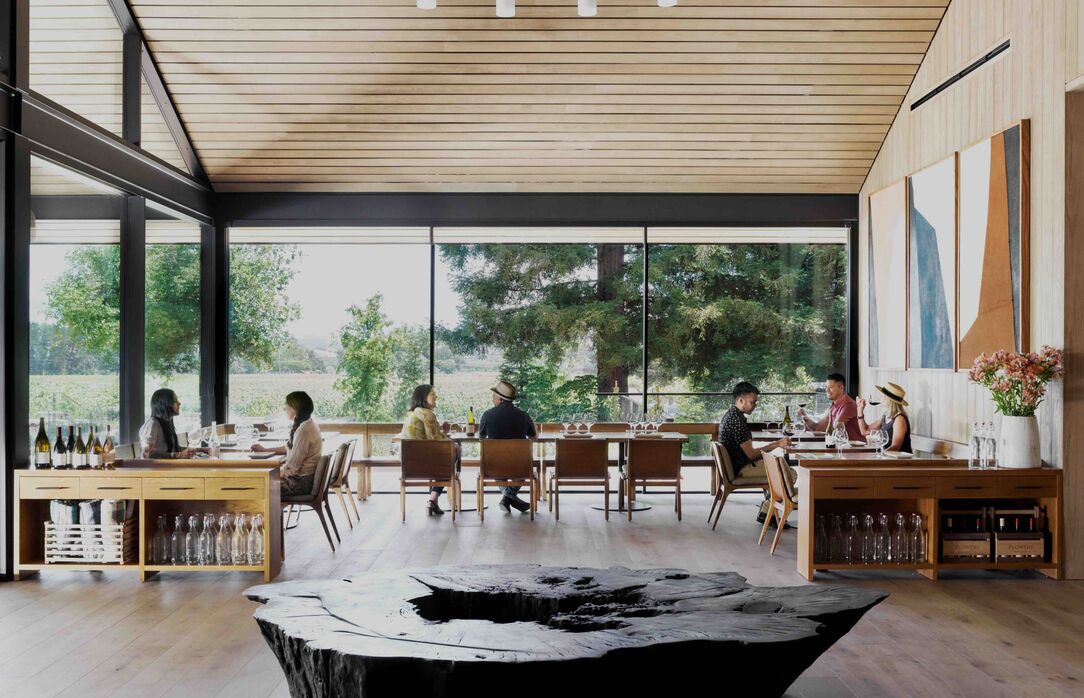
House of Flowers, nestled in Healdsburg's redwoods, wasn't designed as an afterthought. Chantal is deeply involved in shaping how guests experience the wines and the story they tell.
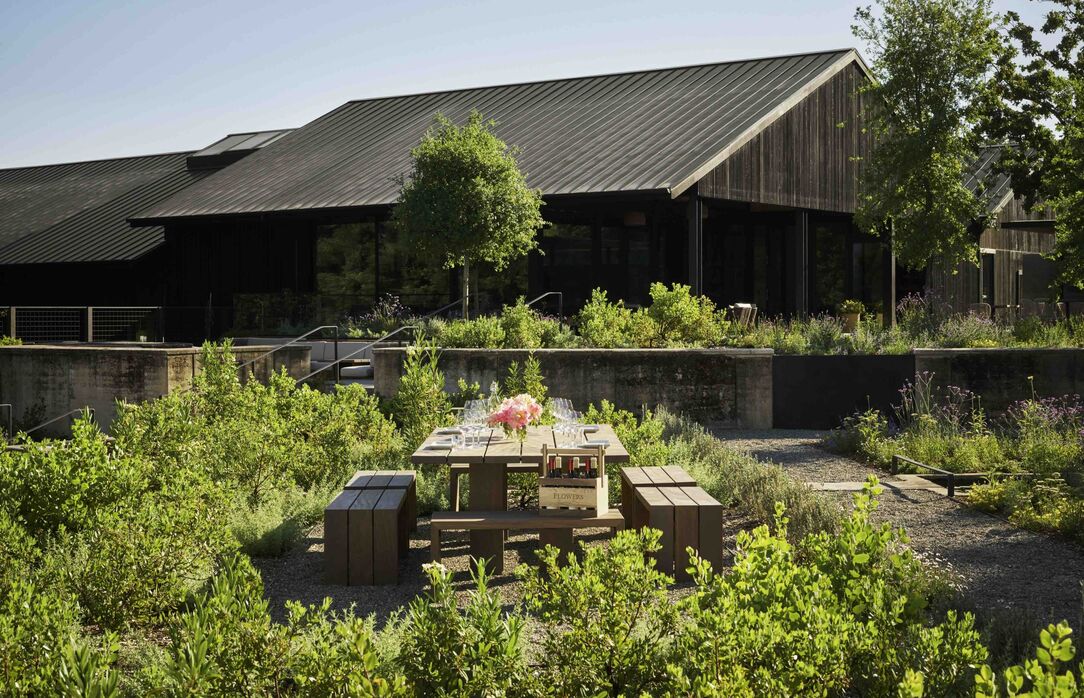
"We wanted to create a space that embodies the wild natural beauty of the far Sonoma Coast while offering accessibility and warmth," Chantal explains. Natural materials—bleached cypress, rammed earth, salvage wood—evoke the rugged coastal landscape. Thoughtful sequencing creates intimacy. Guests taste their coastal Pinot Noir and Chardonnay in lush gardens or intimate interiors, paired with seasonal bites from local farms.
"I hope guests feel as if they're visiting a friend's home," Chantal says, "while sensing the deep connection between our wines and the rugged coastal landscape."
She's genuinely involved in this aspect too. "I bring friends and family here all the time," she notes. "And I work closely with our chef, Wilson McFarlin. The goal is always that the pairing elevates the wine and the wine elevates the pairing. It's a symbiotic thing."
Rhythm, Structure, and the Redwoods
Outside of the cellar, Chantal credits travel and changing scenery as her primary source of inspiration. "Ideas appear when I change my rhythm," she observes. Whether it’s road trips to wine country, camping in the redwoods, exploring the desert, or seeking perspective in vineyards halfway around the world, stepping out of routine resets her thinking.
"Structure and rhythm are important in this work," she explains. "You need a framework so you know where the openings are to change it." But that framework only works if you step outside it periodically.
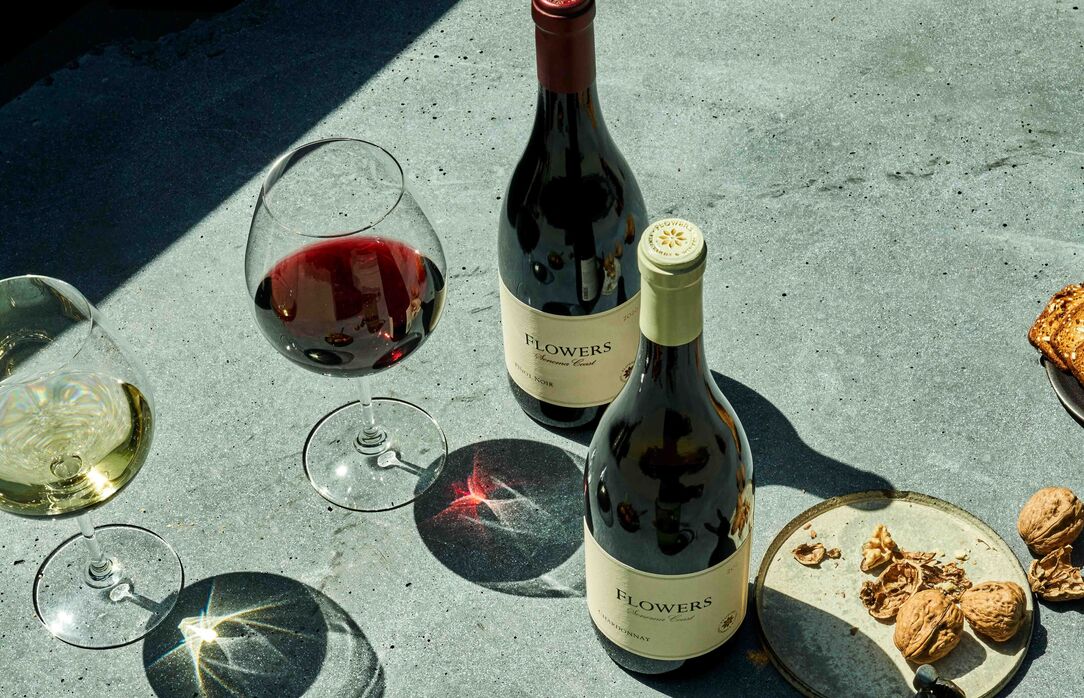
When asked about her go-to wine after a long day in the cellar, her answer reveals priorities. "I'll typically start with a coastal Chardonnay—for the purity, transparency, acidity, freshness," she says. "Then maybe a high-elevation Pinot Noir for something more serious. Both have enough character and grip to stand up to dinner, but they never overshadow the meal or the moment."
Flowers and Appellation Healdsburg: A Natural Partnership
The relationship between Flowers and Appellation Healdsburg flows naturally from shared values. Both prioritize place-based authenticity over corporate polish. Both believe in transparency—in showing the work, the effort, the decisions behind exceptional hospitality and wine.
"I'm grateful for what Appellation is building here," Chantal reflects. "They're honoring the foundation that existed while creating something new. We're looking forward to more exclusive tastings and experiences together—ways to deepen the connections between guests and our land."
When guests visit House of Flowers through Appellation Healdsburg, they're not simply tasting wine. They're encountering the result of decades of observation, decades of presence, decades of people showing up to work hard on some of the most remote and challenging terrain in California wine country. They're tasting wilderness—and they're home.
*All images courtesy of Flowers Vineyards & Winery.